From a dashboard to an experience.
A growing product stage, composed interfaces and purposeful interactions explain the daily workflow. Motion introduces the product; it does not take control of scrolling.
Product Engineering · Veterinary Operations · Kenya
Run the clinic. Work the field. Keep one record. I’m building the product, its secure foundations and an interactive experience that makes connected veterinary care feel tangible.
From clinic desk to farm gate
I’m building PawSuite around the work between appointments: the handover, the field note, the stock movement and the follow-up. The public experience makes that connected story tangible.
Step inside the experience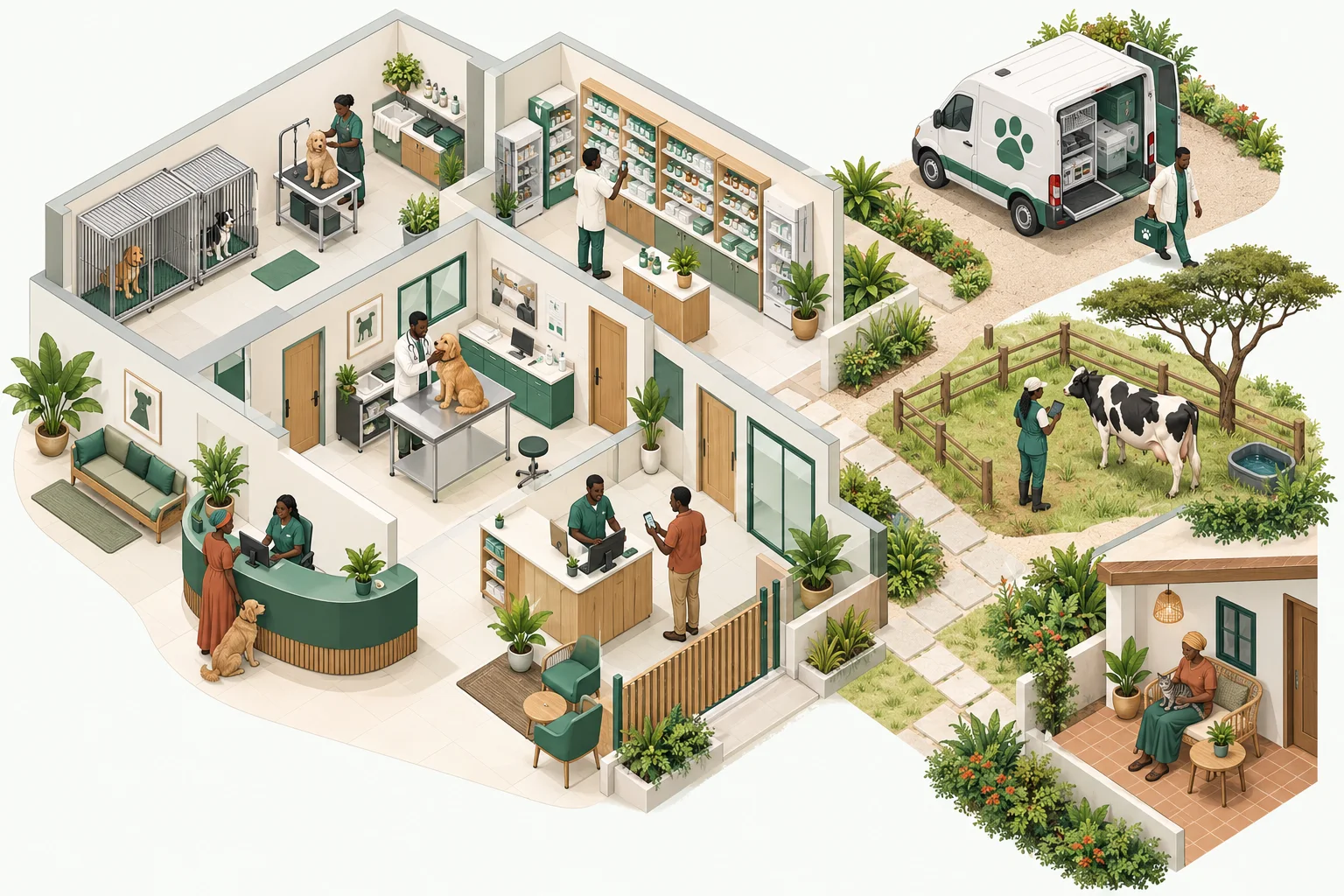
Experience the product
Four moments from the redesigned PawSuite experience. Explore the interfaces, then see the product decision behind each one.
A shared queue makes ownership and the next action legible. The interactive check-in demonstrates the change rather than asking a visitor to imagine it.
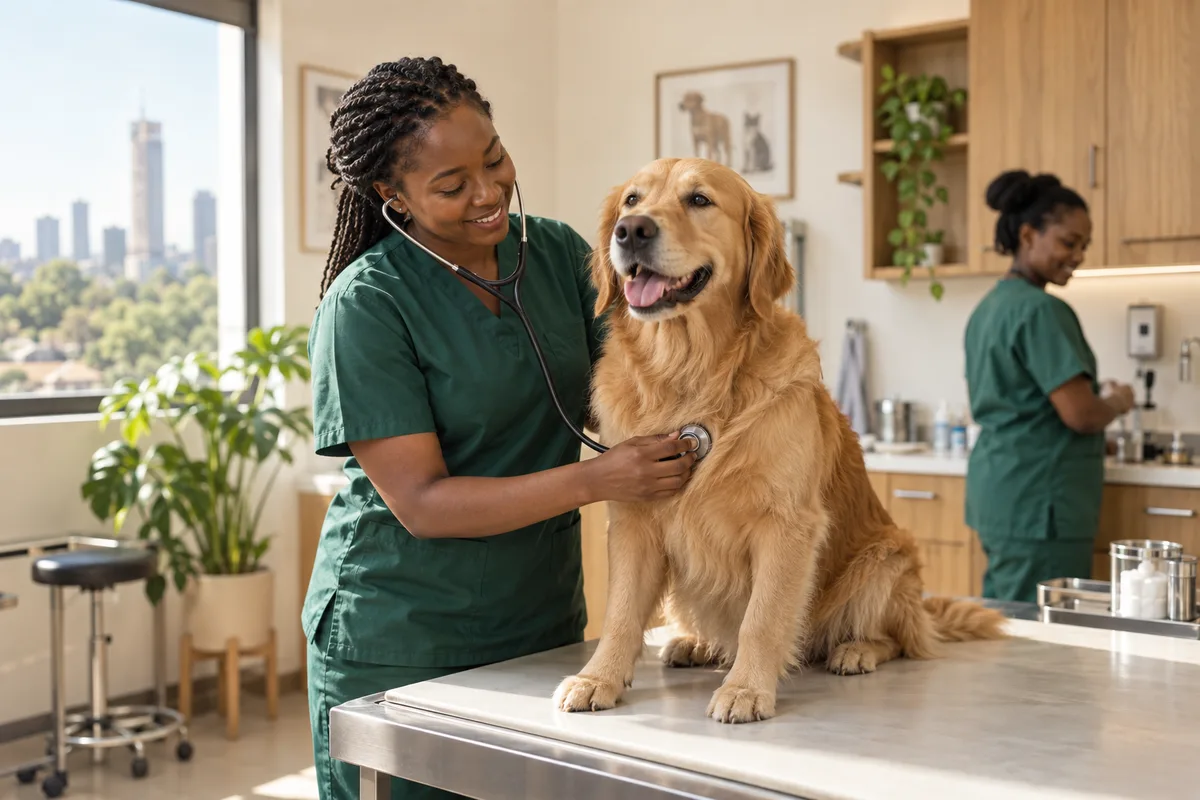
Golden retriever · Female · 3 years
SubjectiveRoutine wellness visit. Eating and activity unchanged.
ObjectiveObservations stay attached to this visit.
Document examination findings and agree the next check-up with the owner. This demonstration preserves the distinction between a draft and clinical sign-off.
Photography anchors the clinical UI in care. History, observations and the next step sit together, with progressive disclosure for the care plan.
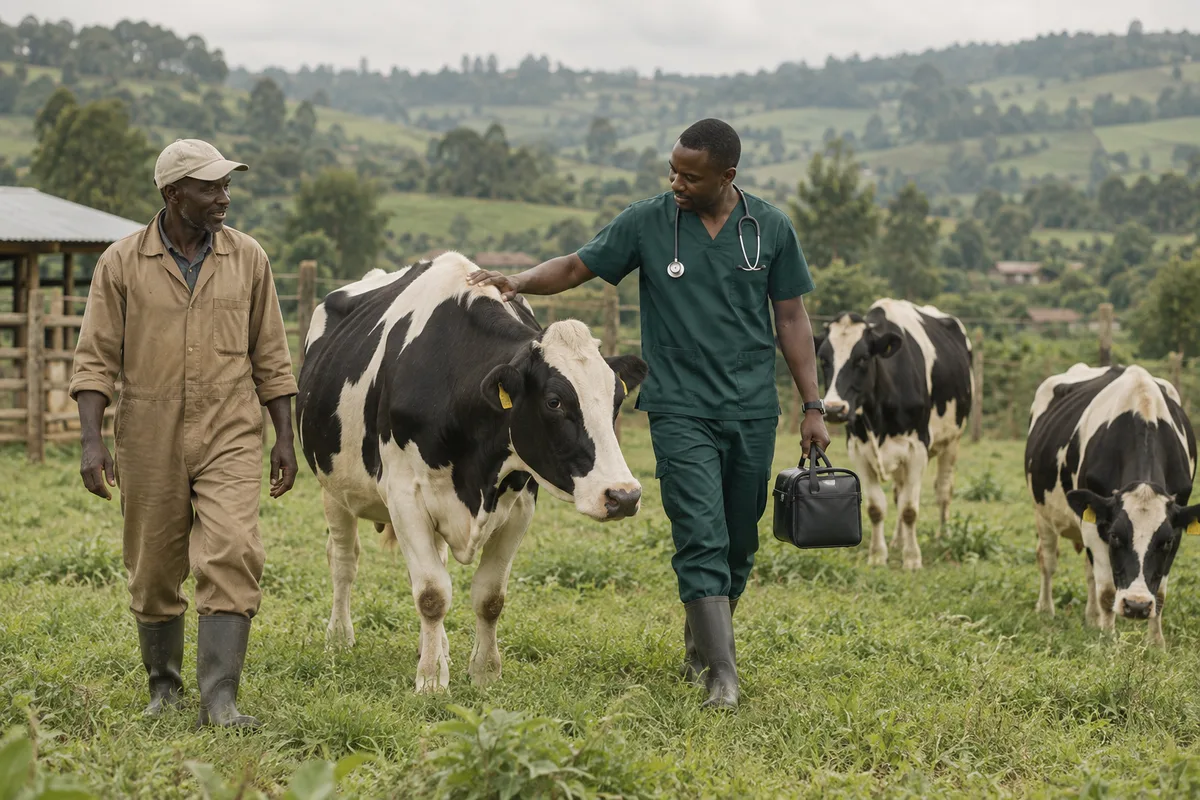
24 cattle · Farm block A
Herd observations recorded. Review individual animal findings with the clinic team.
The reconnection interaction changes the draft’s state without pretending it has become final. Useful offline work and authoritative review remain separate.
The client journey belongs in the product story too. Booking, clear updates and useful reminders connect the clinic visit to the care that follows at home.
Thursday · 09:00
Appointment details ↗A pet-owner view turns a feature list into a familiar moment: the upcoming visit, the reminder and the conversation that continues after the appointment.
Interactive product demonstrations · application delivery is documented below.
Designing the first impression
A growing product stage, composed interfaces and purposeful interactions explain the daily workflow. Motion introduces the product; it does not take control of scrolling.
Clinic photography, field imagery and the illustrated care world help companion, mixed and mobile teams recognise their own work.
Readable text, stronger contrast, keyboard-operable tabs, reduced-motion support and progressively revealed features keep the experience approachable.
Product state
Field workflows need to explain what is local, what is stale, what is waiting for the server, and what is authoritative. PawSuite uses explicit state language so a user is never encouraged to confuse a recoverable draft with a final clinical or financial action.
The same vocabulary is intended to appear across product UI, offline behavior, and public mockups.
Architecture
PawSuite is Kenya-first without making the architecture Kenya-only. The product favors a modular monolith and explicit domain boundaries, with integration seams for payments, messaging, interoperability, and eventual cloud deployment.
Each decision connects product behavior to a technical boundary.
The animal, visit, forms, inventory, and field models cannot assume a dog-and-cat-only clinic. Individual animals and groups/herds are both part of the product thesis.
M-PESA is a Kenya-specific implementation priority, but invoice settlement stays separate from the payment-provider adapter so cash, manual references, and future rails remain first-class.
Field notes and observations may be recoverable locally. Clinical signing, payment verification, stock deduction, and permissions remain server-authoritative final actions.
Next.js, Fastify, PostgreSQL/Drizzle, shared packages, and an outbox/worker boundary keep the early system understandable while preserving clean seams for later scale and integrations.
Clinical work stays natural for the vet. Mapping layers can later translate internal concepts into FHIR, LOINC, VeNom/SNOMED, CSV, PDFs, or reporting artifacts without forcing those standards into every interaction today.
The repository records GCP as the deployment direction, with region, cost, and latency validation still part of the delivery decision rather than presenting an undeployed architecture as live.
Current build
The implementation sequence intentionally puts tenant isolation, database evidence, sessions, and browser authentication ahead of the broader clinical, payments, inventory, and offline product slices.
This portfolio reflects the repository state rather than the complete future MVP vision.
Engineering evidence
The identity and authentication work is useful portfolio evidence because it shows how the product handles isolation and browser trust before sensitive veterinary and financial records arrive.
Forced PostgreSQL RLS, transaction-local tenant/user context, active membership resolution, and tests exercising switched and missing tenant contexts.
Opaque-session persistence, refresh rotation/replay handling, expiry behavior, self-revocation, and append-only security evidence.
Password verification, credential-race handling, transparent Argon2id rehash, session issuance, refresh rotation, and replay compromise are coordinated through PostgreSQL transactions.
Access and refresh credentials stay in HttpOnly cookies; session-bound CSRF, exact-origin CORS, SameSite=Strict, no-store responses, and generic authentication failures define the HTTP boundary.
Mockups can preview accepted workflow concepts, but the portfolio distinguishes implemented identity/auth foundations from future clinical, financial, inventory, and offline vertical slices.
Draft, local save, pending sync, conflict, verified, and final states are intentionally different so the interface does not turn network uncertainty into clinical or financial certainty.
Current boundary
That is intentional. The product thesis, workflows, architecture, data model, tenancy, database security, and authentication boundary are being established before the broader operational modules are represented as complete.
Not claimed as complete
Explore PawSuite
The live experience is useful for the product story and early-access positioning. This case study is deliberately stricter about what has already been implemented in the application foundation.